4x2 vs 6x4 Drive Axle: Which Layout Fits Your African Route
The axle layout is one of the first and most consequential decisions in specifying a truck: settle it and everything downstream - body form, tyres, running cost, resale - becomes easier to reason about. Leave it vague and you either pay for capability you never use, or run a layout that cannot cope with the ground beneath it. This guide explains what the notation means, where each layout earns its keep, and how to weigh the trade-offs before you commit money.
What 4x2 and 6x4 actually mean
The two numbers describe the running gear, not the cab and not the body. Read them as total wheel-positions times driven wheel-positions. A 4x2 has two axles in total: one front axle steers, one rear axle drives. A 6x4 has three axles: one front axle steers and two rear axles are both driven.
The first digit tells you how many wheel positions touch the road; the second, how many are powered. That distinction drives everything else in this guide: payload rating, traction on broken surfaces, tare weight, tyre count and turning circle. Note that a 6x4 often runs dual rear wheels, so a rig may show ten road-contact points while the notation still reads 6x4 - the second figure counts driven axles, not tyres.
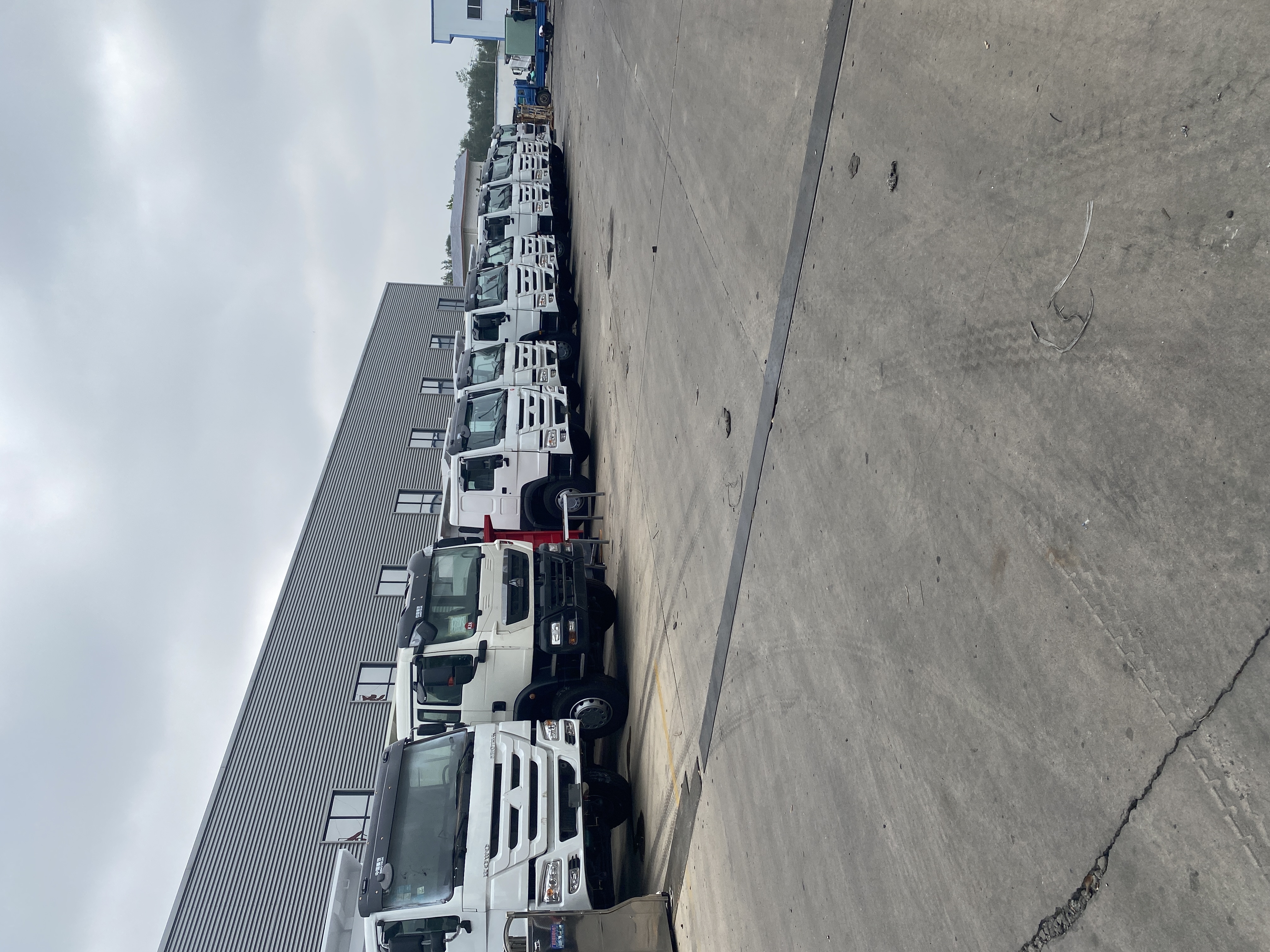
Where a 4x2 earns its keep
A 4x2 keeps the driven hardware to a minimum: one driven rear axle means fewer differentials, fewer shafts and fewer tyres to buy and rotate. The driveline is simpler, which generally means fewer wear parts and a lighter tare weight.
- Paved and graded roads: on sealed highways a single driven axle is plenty, and you are not carrying a second driven axle you will seldom use.
- City distribution and tight runs: one fewer rear axle shortens the turning radius for streets, gates and yard corners.
- Light, high-frequency payloads: lower tare leaves more of the gross rating for cargo, with better fuel economy per tonne-kilometre on good surfaces.
- Box, reefer and light service bodies: dense but not massive cargo on mostly tarmac routes.
The trade-off: with only one driven axle, once both driven wheels lose grip - deep mud, a steep wet climb, a rutted track - there is no second axle to recover. A 4x2 is a layout for roads that mostly behave.
Where a 6x4 earns its keep
A 6x4 adds a second driven rear axle, and that changes the physics of the vehicle on hard routes.
- Unpaved, muddy and broken surfaces: two driven axles keep torque reaching the ground when one wheel breaks traction - the difference between travelling and being stuck on mine access roads, plantation tracks and seasonal mud.
- Heavy, concentrated loads: spreading load over three axles raises the practical payload ceiling - the default for aggregates, ore, cement and bulky freight.
- Ground clearance and stability: the longer wheelbase and extra axle let the chassis sit higher and carry weight more stably on uneven ground.
- Arduous gradients: on long or loose climbs the second driven axle keeps the rig moving where a single driven axle would spin.
The trade-off: more hardware means more tare weight (less cargo per trip), more tyres, a wider turning circle and higher running cost. On a perfect highway a 6x4 carries iron it does not need.
The trade-offs, side by side
The honest question is not which layout is stronger but which one matches the worst day of your route. Match the layout to the poorest surface and the heaviest load in the regular cycle, not the average.
| Dimension | 4x2 | 6x4 |
|---|---|---|
| Payload headroom | Lower tare, lower axle rating | Higher practical load spread over three axles |
| Road condition | Sealed, graded, urban | Unpaved, muddy, mine and construction |
| Maneuverability | Shorter turning circle, lighter | Longer wheelbase, wider circle |
| Tyres and maintenance | Fewer tyres, simpler driveline | More tyres, two driven axles to service |
| Running cost | Lower on good roads | Higher, but earns it off-road |
Drive axle and body form are separate decisions
A frequent confusion is mixing the axle layout up with the body form. The drive axle - 4x2 or 6x4 - is about how the truck is driven and loaded along the ground. The body form - tipper, tractor chassis, flatbed, tank - is about what the truck does with that load. The same axle layout can carry different bodies: a 6x4 can sit under a tipper or a tractor chassis; a 4x2 can sit under a light tipper or a box body.
Choose the axle layout from the route and the load, then choose the body from the task - do not let one decision silently make the other for you.
Tipper vs tractor chassis on a shared 6x4 layout - the body-form question, answered separately
Match the layout before you buy
The safe sequence: fix the route and load profile, pick the axle layout that survives the worst day, then pick the body. A 4x2 rewards disciplined paved-duty cycles with lower cost; a 6x4 earns its weight the moment the surface or the load stops cooperating. Neither layout is a mistake - only a mismatch is.
Before you commit, walk the actual routes and weigh the real loads rather than guessing from a specification sheet.
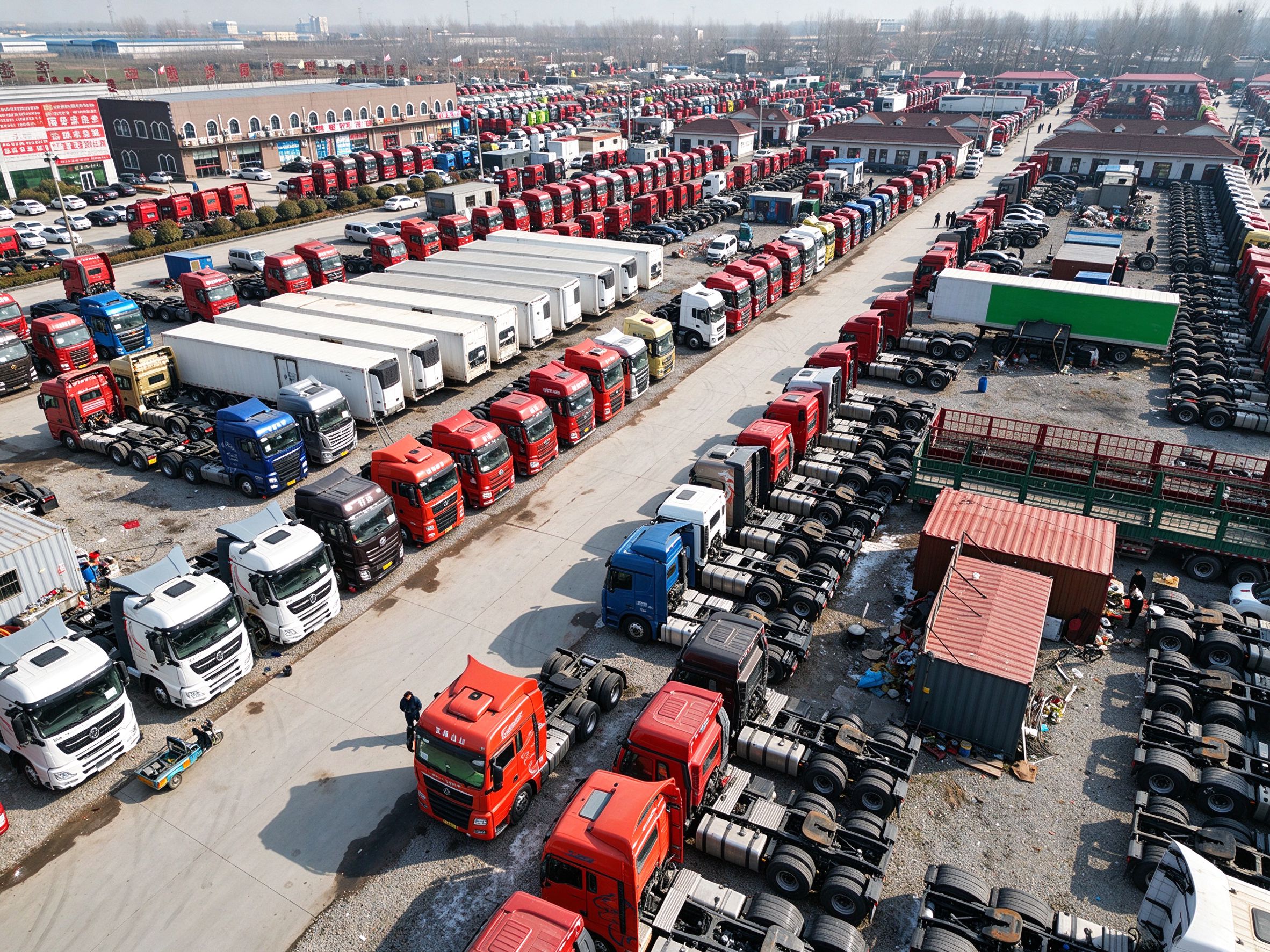
The full selection sequence, from market rule to model codeWhat we check on every unit before saleDestination-market considerations by country
Frequently asked
What is the real difference between 4x2 and 6x4?
The notation reads total wheel-positions times driven wheel-positions. A 4x2 has two axles with one driven; a 6x4 has three axles with two driven. The extra driven axle is what gives the 6x4 its traction and load spread.
Which layout is better for unpaved or muddy roads?
The 6x4. With two driven rear axles, torque keeps reaching the ground when one wheel loses grip - the failure mode on mud, ruts and mine or construction tracks. A 4x2 is best kept on sealed or graded routes.
Does picking the drive axle decide the body form?
No. Axle layout and body form are separate decisions. The same 6x4 can carry a tipper or a tractor chassis. The axle choice follows the route and load; the body choice follows the task.
Which layout costs more to run?
The 6x4, on paper: more tyres, two driven axles to maintain and higher tare weight. On rough or heavy cycles that cost buys uptime a 4x2 cannot deliver. On paved light-duty work the 4x2 is cheaper per tonne-kilometre.
Can a 4x2 handle heavy loads?
Up to a point. Its single driven axle and two-axle rating suit light, high-frequency payloads on good roads. For concentrated or heavy loads, especially off-road, the 6x4 three-axle spread is the safer specification.
Sources
- 4x2 / 6x4 notation convention: total wheel-positions times driven wheel-positions, standard heavy-truck running-gear terminology
- Traction and load-spread behaviour of twin driven rear axles: general vehicle engineering reasoning